

For many seniors, home care is not just about receiving support—it’s about building a life that feels stable, familiar, and safe. One of the most effective ways to create that stability is through consistent daily routines.
Routines help seniors maintain independence, reduce anxiety, and stay engaged with their environment. They also help caregivers deliver better, more personalized support.
Why Routine Matters for Seniors
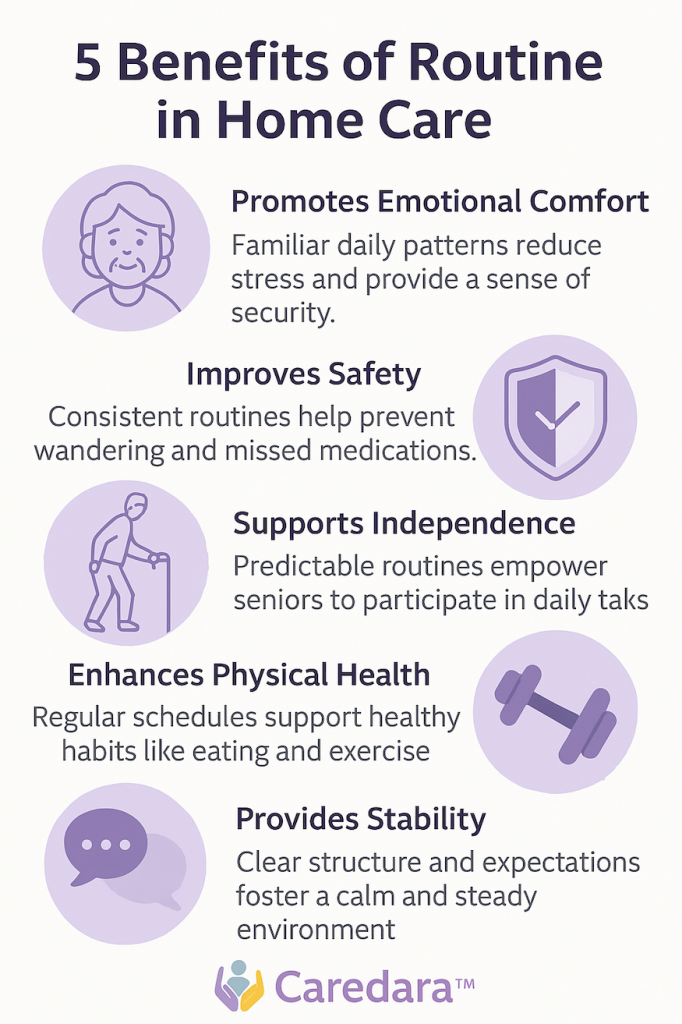
- Promotes Emotional Comfort
Familiar patterns—morning coffee, medication times, walks, or evening TV—help reduce stress and provide grounding. For seniors experiencing memory loss or dementia, predictable routines are especially calming. - Improves Safety
A structured day reduces the likelihood of confusion, wandering, or missed medications. Caregivers can anticipate needs and prevent small issues from becoming urgent ones. - Supports Independence
When seniors know what to expect, they can participate more actively in their day. Even small accomplishments, like dressing or preparing a light snack, reinforce dignity and confidence. - Enhances Physical Health
Regular meals, hydration reminders, mobility exercises, and sleep patterns all contribute to healthier bodies and better aging outcomes.
How Caregivers Can Build Supportive Routines
- Start with the Senior’s Preferences
Ask about long-standing habits—breakfast times, hobbies, bathing preferences, and social routines. Respect what feels natural to them. - Keep It Simple and Consistent
A routine doesn’t need to be rigid. It just needs to support predictability: wake-up rituals, meal windows, care tasks, and bedtime patterns. - Include Mental and Social Activities
Reading, puzzles, conversation, or walks can be built into the day to stimulate the mind and lift mood. - Be Flexible When Needed
While routines help, they should never override comfort. If a senior is tired, anxious, or having a difficult day, adjust with compassion. - Communicate Clearly
Let seniors know what’s happening next. This helps reduce uncertainty and fosters confidence—especially for those with memory loss.
The Role of Routine in Caregiver Success
Routines help caregivers as much as seniors:
- They create structure and reduce stress.
- They improve communication with families.
- They make care plans easier to follow.
- They allow caregivers to anticipate needs and deliver higher-quality support.
A good routine creates rhythm, ease, and trust—allowing both seniors and caregivers to feel grounded and supported throughout the day.
Looking Ahead
Home care works best when it feels natural and human. Routines transform care from a series of tasks into a comforting partnership built on safety, dignity, and stability.
Because when each day feels predictable, seniors feel empowered—and caregivers feel confident.