

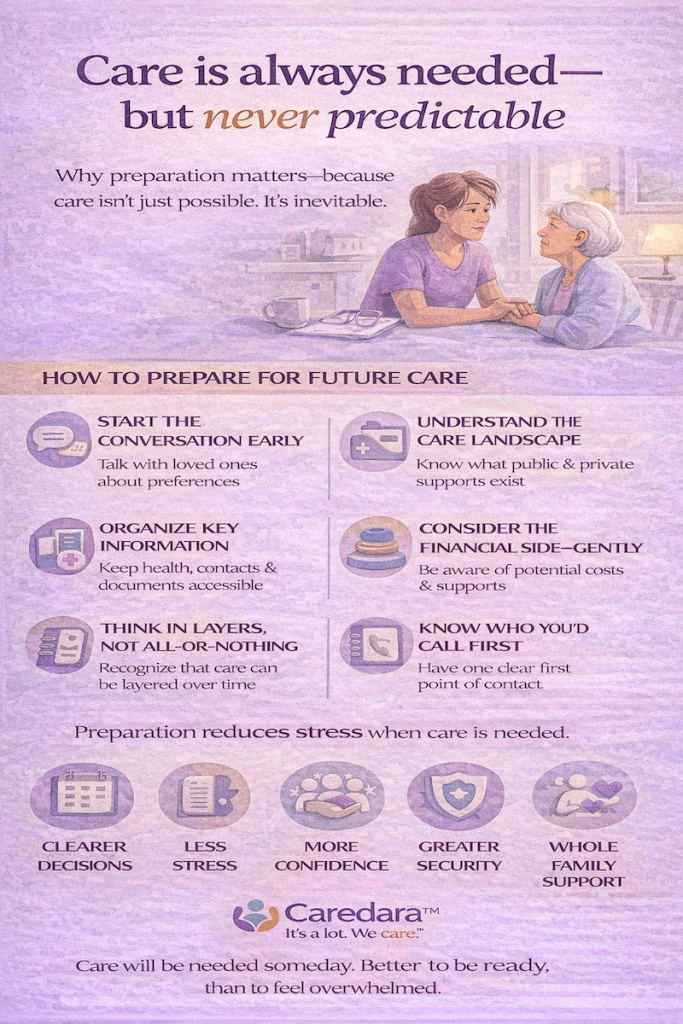
Most people don’t plan for care the way they plan for retirement, education, or major life purchases. Not because they don’t care—but because care feels distant, uncomfortable, and uncertain.
And yet, care is one of the few things in life that is almost guaranteed.
What isn’t guaranteed is when it will be needed, how quickly it will escalate, or what form it will take.
That unpredictability is what makes care so stressful when it arrives. But it’s also why preparing ahead of time—before care is urgent—can make a meaningful difference.
Why Care Feels So Overwhelming When It Begins
Care often starts suddenly:
-
A fall
-
A diagnosis
-
A hospital discharge
-
A noticeable decline that can’t be ignored anymore
When that moment comes, families are usually forced to make decisions quickly—while emotional, tired, and unsure of what to do next.
The stress doesn’t come from caring alone.
It comes from caring without a plan.
Preparation Doesn’t Mean Expecting the Worst
Preparing for care isn’t about assuming something bad will happen tomorrow. It’s about accepting a simple truth:
when care is needed, decisions come fast.
Preparation gives families space to think clearly, act confidently, and avoid crisis-driven choices.
When care is planned—even loosely—families can focus on care itself, rather than scrambling to figure out logistics.
What It Means to Be “Care-Ready”
Being care-ready doesn’t require a detailed roadmap. It means having some foundations in place so you’re not starting from zero.
Here are practical ways to prepare—without stress or overplanning.
Practical Tips to Prepare for Future Care
1. Start the Conversation Early
Talk openly with parents or loved ones about preferences:
-
Where they want to live as they age
-
What kind of help they would accept
-
Who they trust to help make decisions
These conversations are easier before care is urgent—and they reduce uncertainty later.
2. Organize Key Information
Having basic information accessible can save enormous stress:
-
Health conditions and medications
-
Emergency contacts
-
Insurance and benefit information
-
Important documents and passwords
This isn’t about control—it’s about clarity.
3. Understand the Care Landscape
Even a high-level understanding helps:
-
What public supports exist
-
What private care typically costs
-
What services are limited or waitlisted
-
Where gaps often occur
Knowing this ahead of time prevents shock when care is suddenly needed.
4. Think in Layers, Not All-or-Nothing
Care rarely arrives fully formed. Needs change over time.
Preparing means recognizing that care can be layered:
-
Family support
-
Community resources
-
Professional care when needed
You don’t need to decide everything—just understand that support can be added gradually.
5. Consider the Financial Side—Gently
Care planning doesn’t require precise budgeting, but awareness matters:
-
What could you realistically contribute?
-
What supports might offset costs?
-
What financial pressure points could arise?
Even rough planning reduces fear.
6. Know Who You’d Call First
In a moment of urgency, knowing where to start matters more than knowing everything.
Having one clear first step—whether that’s a provider, a navigator, or a trusted contact—can reduce panic and delay.
Why Preparation Changes Everything
When families prepare, even lightly:
-
Decisions feel less rushed
-
Stress is reduced
-
Care feels more intentional
-
Families feel more confident
-
Loved ones feel more secure
Preparation doesn’t eliminate uncertainty—but it gives families footing when uncertainty arrives.
Care Will Come. Being Ready Helps.
Care is always needed.
It’s just never predictable.
Preparing doesn’t mean you’ll need care tomorrow. It means that when the day comes, you won’t be figuring everything out at once—under pressure, emotion, and time constraints.
You’ll already have a place to start.
And sometimes, that’s the difference between feeling overwhelmed and feeling supported.